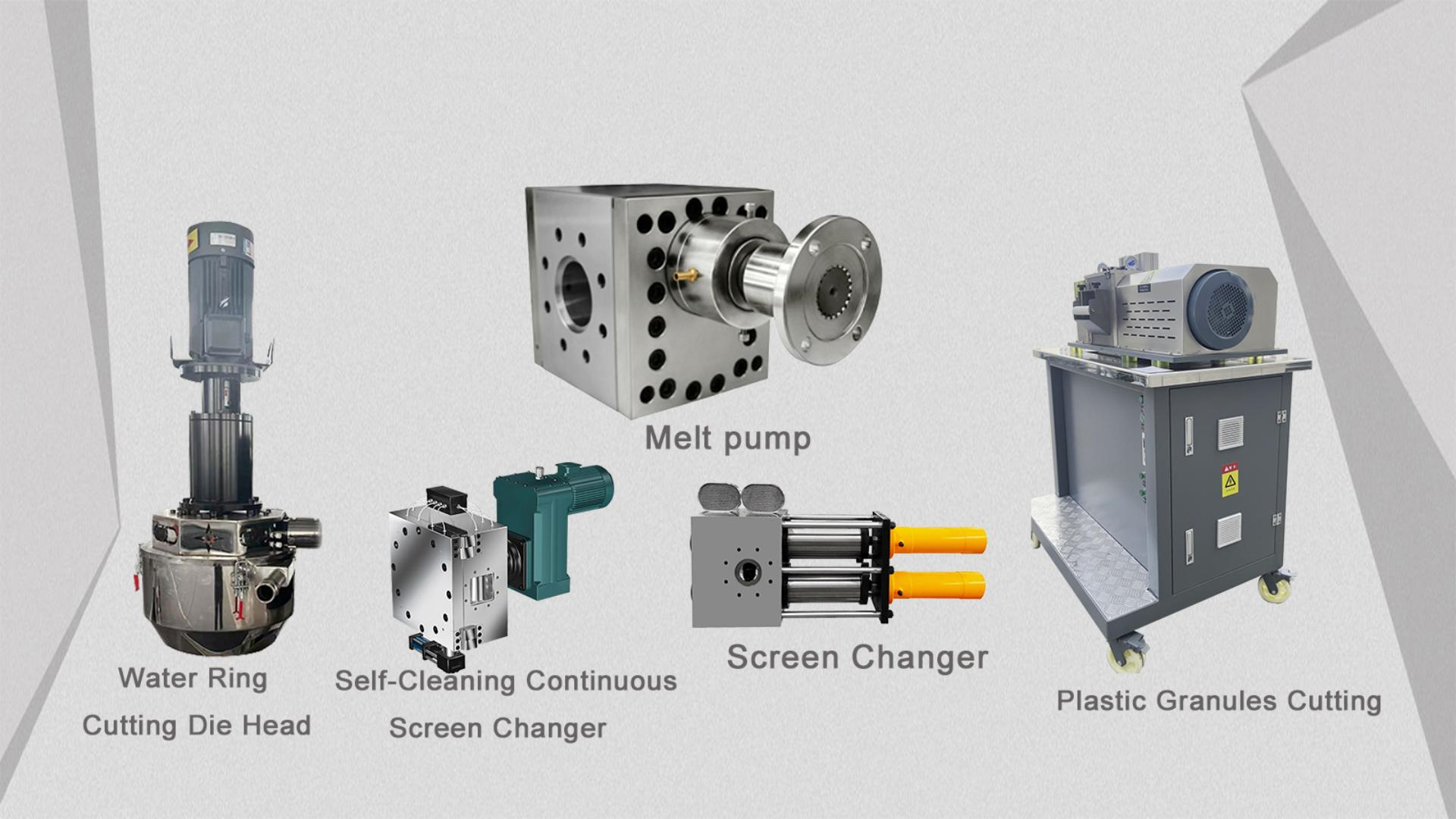
In-depth Analysis of Core Functions and Technical Characteristics of Melt Metering Pumps
1. Basic Equipment Positioning
The melt metering pump is a gear-type positive displacement conveying device widely used in high-temperature, high-viscosity polymer processing lines—such as those for plastic and rubber extrusion, chemical fiber spinning, film casting, pelletizing, and pipe/profile production. Installed at the discharge end of the extruder, it performs the functions of melt pressurization, pressure stabilization, and precise volumetric metering, serving as the core unit for pressure stability and metering accuracy in precision extrusion processes.
2. Four Core Functions
1. Precise Volumetric Metering with Linear, Controllable Flow
Utilizing a pair of high-precision meshing gears to form sealed volumetric chambers, the pump conveys a fixed volume of melt per revolution, establishing a strictly linear, proportional relationship between output flow rate and rotational speed. It remains unaffected by upstream feeding fluctuations or minor material temperature variations; its metering precision far exceeds the inherent conveying accuracy of single-screw extruders. This enables stable control of the extrusion output, fundamentally ensuring consistency in product thickness, weight, and dimensions.
2. Melt Pressurization and Stabilization; Elimination of Pressure Pulsations
Extruder screw discharge often exhibits periodic pressure fluctuations, which can easily lead to uneven film thickness, dimensional deviations in pipes, or filament breakage during spinning. The melt metering pump possesses independent pressurization capabilities, boosting the melt to the pressure required for the forming process. Simultaneously, the volumetric buffering effect of the pump body isolates inlet-side pressure fluctuations, ensuring steady output pressure, significantly reducing the amplitude of melt pressure pulsations, and stabilizing the processing window.
3. Sharing Extruder Load; Optimizing Main Machine Operating Conditions
When manufacturing high-pressure products (such as thick-walled sheets, high-barrier films, or chemical fibers), the high-pressure load is borne entirely by the metering pump. The extruder is responsible only for melting, plasticizing, and low-pressure feeding, allowing the main machine to operate under lower temperature and pressure conditions:
Reduces axial screw thrust and wear on the gearbox and thrust bearings, thereby extending the overall service life of the extruder;
Minimizes excessive shear heating of the melt, preventing material degradation, yellowing, and bubble formation;
Lowers energy consumption for the main drive, enhancing the energy efficiency of the entire production line. 4. Improves melt quality and enhances the appearance and yield rate of finished products
Sealed, high-pressure transport within the pump compresses microscopic gas bubbles in the melt, reducing defects such as pinholes, delamination, and voids;
Stable, uniform melt delivery eliminates localized flow velocity variations, resulting in smooth product surfaces free from streaks or flow marks;
Constant, stable flow reduces thickness and weight variations and lowers the scrap rate, making it suitable for the production of high-end, precision products.
3. Core Technical Features
1. Strong adaptability to operating conditions; withstands "three-high" environments
Capable of stable, long-term operation under conditions involving high temperatures, high pressures, and high-viscosity melts:
Temperature adaptability: Standard range of 200–350°C; specialized high-temperature models can exceed 400°C;
Working pressure: Maximum inlet-outlet pressure differential of 30 MPa, meeting high-pressure requirements for thick sheets, fiber spinning, and multi-layer co-extrusion;
Media adaptability: High-viscosity molten materials such as PP, PE, PVC, PET, PA, rubber, and thermoplastic elastomers.
2. Precision mechanical structure; low leakage and long service life
Gears, pump bodies, and side plates are made from specialized hot-work die steel or nitriding steel and undergo integral nitriding and quenching treatments, ensuring wear resistance and resistance to high-temperature creep;
Micron-level precision machining ensures strict control over gear meshing clearances and end-face clearances, resulting in high volumetric efficiency and minimal internal leakage or material seepage;
Utilizes a combined sealing structure featuring high-temperature packing seals and spiral labyrinth seals; designed for high-temperature melts to completely prevent material leakage and reduce the frequency of downtime for cleaning.
3. Linear, stable flow output with minimal pulsation
The positive displacement principle ensures flow remains unaffected by minor fluctuations in discharge backpressure; combined with a high-precision gear meshing structure, melt delivery pulsation is far lower than that of screw extrusion, making it suitable for ultra-precision extrusion applications such as optical films, medical tubing, and ultrafine fibers.
4. Flexible speed control and automated production line integration
Equipped with a variable-frequency servo drive system, the unit offers stepless speed adjustment, allowing for precise control of discharge flow simply by varying the motor speed. It integrates seamlessly with extrusion line PLC control systems to enable synchronized, closed-loop operation with the main extruder, haul-off unit, and winder, ensuring a high level of automation.
5. Easy maintenance and high customization
Features a modular, split-structure design for convenient assembly and disassembly; gears and seals can be replaced individually, saving time during maintenance and inspection;
Customized solutions based on material properties: stainless steel for corrosive melts, cemented carbide gears for high-wear applications, and reinforced pump bodies for high-pressure scenarios;
Specifications range from low-flow spinning pumps to high-flow pumps for sheet and pelletizing lines, accommodating everything from small-scale pilot lines to 10,000-ton-class mass production lines.
4. Summary of Application Value
The melt metering pump serves as the core hub for pressure stabilization and metering within an extrusion system. It does not replace the extruder's plasticizing function but rather compensates for the inherent limitations of screw extrusion—such as unstable conveying, significant pressure fluctuations, and high pressure loss. It is an indispensable piece of core equipment for achieving high-precision, highly stable, and low-loss continuous production in manufacturing lines for precision films, chemical fibers, medical consumables, and high-end profiles.